
Why Won’t It Stop?

We all witness a loop in life; some are on it perpetually, while others stand outside and scoff. Well, don’t be so judgey. Recognize that this carousel—like the one from your childhood—is an easy one to hop on, but almost impossible to break free from. Think of being pulled in by the gravity of it all, unable to push eject. As the not-so-merry-go-round accelerates, many are left in its dust. Catch it: the loop is addiction, and the dusty ones are children. As a side note: pay close attention to your own circle, because 1 in 4 of your friends are already dizzied by watching a parent on said “ride”[1]. Sadly, up to 60% of “the dusty” are at risk for future addiction[2]. The recent stats are staggering when you add up that almost 40% of these children are now being raised by others that are not their own parents[3]. All this, in the name if a good time. A ride. Do you have friend group of 4 or more? Stats don’t lie, either you know one or you are one. Simple math and simpler physics: with numbers like these, the cycle is bound to continue. Admit it. I’m right.



It is easy to name off what makes drugs so, ughh: their smells, the crazy way they make you look/act, the shameful feeling of regret once you—as a user—are found out, the comedown, or the side-eyes from people that look at you with distain. Yet, the issues that you encounter regularly—pressures from outside yourself—remain and are presented with some enticing advertisements. Everyone wants to feel free, casual, accepted, even cool. You see those that use drugs become seemingly superhuman, funny, or the life of the party. But what happens when the party ends, and everyone goes home? The ride continues for them, and the spinning makes for a tricky ejection. That superhuman mood shrinks to sub-human, and more mind-altering mechanisms are needed to again stabilize one’s sense of self. Loss of control is undeniable, and the dizziness intensifies, but the seatbelt is jammed.
Still want to ride? Let’s take another analogy for a spin. In the lunchroom, is it easy for you to turn down a soda or candy bar and choose a fresh salad instead? I doubt it. Who has that kind of willpower? Not me. It’s Snickers and Coke all the way! That is the dilemma after all, but we all have choices. Junk food, like drugs, has lasting effects- addiction that ensues upon intake. I know you have heard this monologue—over and over—so I will spare the deets. You get it.
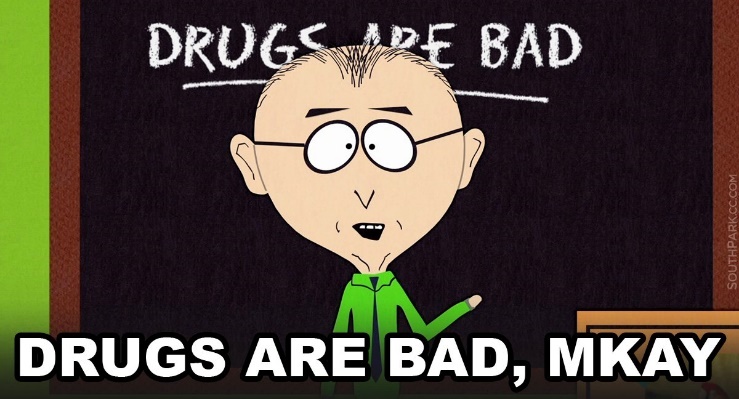
“Say no to drugs! Choose Differently! Blah, blah, blah…”

A Forget about my archaic Comedy Central reference because the issue is deeper than the message. Since a cycle follows, staying away from the carousel altogether is crucial[4]. Remember that quarter of your circle we spoke about earlier- the ones being raised deprived of Mom and Dad? Their real parents were just like you at some point. The distinction is that they chose the Snickers and Coke. Is that what you want for your kids? To be left in the dust, to feel like loving them was a choice that you opposed? That you chose a ride over them? That is exactly how they feel either way. Ask that 1-in-4 from your orbit if you don’t believe me.
The choice is yours and yours alone. Once you take that tempting option, turning back will become almost impossible. Remember: studies show that almost 70% of those that grow up to be addicts, experimented with drugs before adulthood[5]. The ride is a trap. Most drugs have tentacles that grip hold of you and inevitably bring you down; they generate a drowning affect for the victims that chose to ride. Many think they can get by, splashing around in the shallow end or on the stairs—I’m sure that’s where you’re at now—but most detect that survival is scarce in such addictive waters.
Have you ever witnessed someone drowning while trying to save—or uphold—someone else? It is impossible; that is why a trained lifeguard often saves the day. In this case, the lifeguard may be a grandparent, aunt, uncle, distant relative, or (worse) a stranger. However, the lifeguard is there nonetheless, and the saved are always grateful. The first attempt at rescuing is usually to offer a lifesaving device to the addict, assistance that is typically pushed away in the beginning. What does that say about the overwhelming power of the invisible beast, addiction? That a person would rather sink and lose everything, than be saved is beyond me, but it is happening at a rapid rate as our society grows[6].
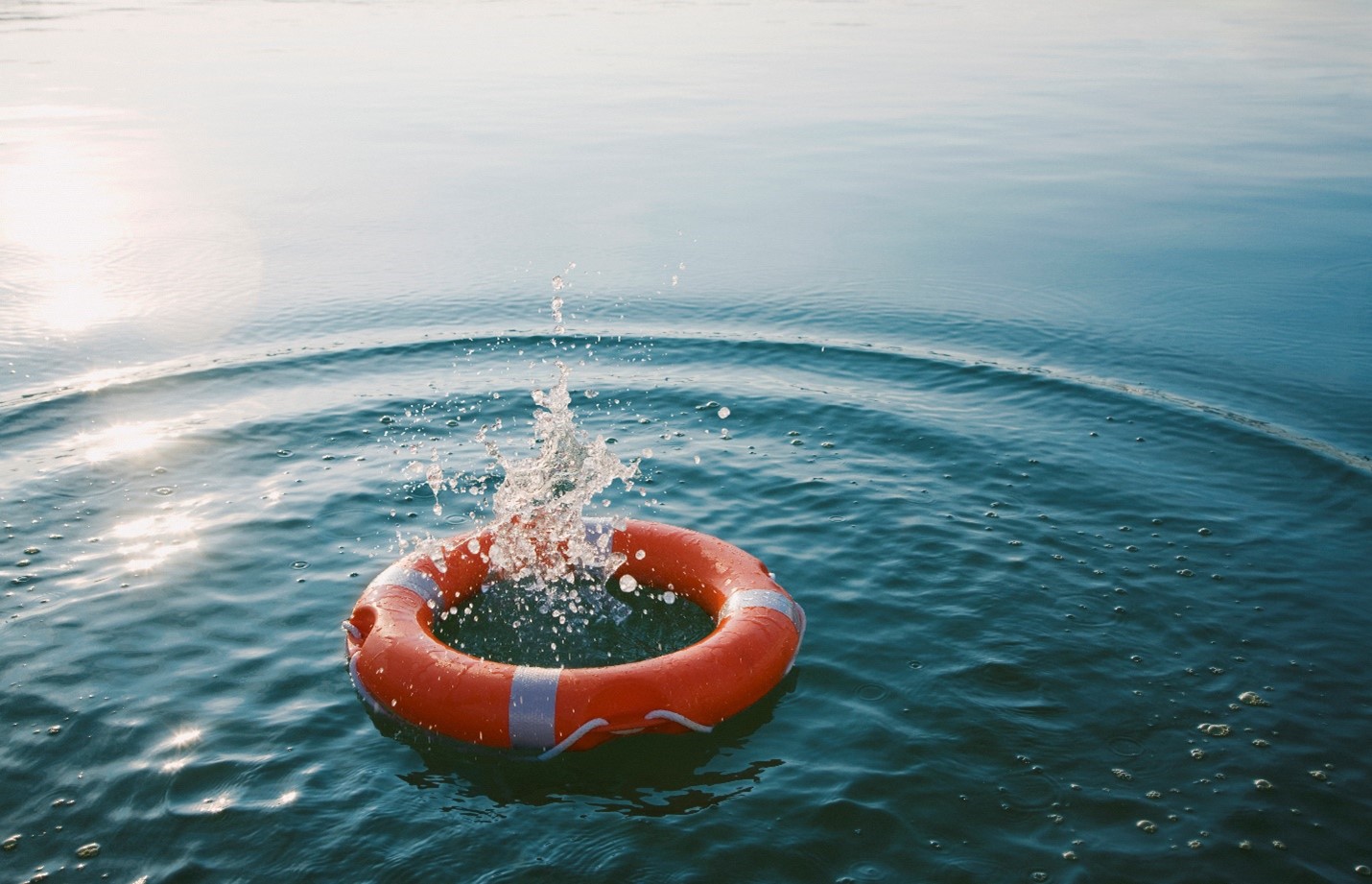
**The very thing that saves is
shaped like the cycle that drowns.
I have two kids, both in high school; they are my stepchildren. Their real mom—whom they have chosen to now call by her first name—has been drowning for fifteen years. She used to be so pretty, just as my daughter is now. These days, her prison photo is one that looks like one of those memes that make fun of meth heads- a shocking memoir of what addiction looks like, left public in the record books for all eternity. We have been on the water’s edge watching for years now, she refuses to accept her lifesaver while the waves of her struggle reach beyond herself. They stretch to my children’s and their half-sibling’s hearts- are all abandoned kids watching their Mama drown.

As you know, this chronicle is not unique to our area. It is something deeply rooted and personal to our community—our circle—and creates a wound that must be healed from the inside out. A wound that can only be avoided by staying off the ride- by generating an external and internal line of communication. Talk to your teachers, your “parents,” your friends; most importantly, talk to yourself. Pledge that you will not succumb to the pressure of a good time that will certainly drown you. If anything, think of yourself, right now, in this moment. Do you truly think you can swim? What about if you were holding a child? Luckily, right now you have options. If they are laid out in front of you—like an oracle of the future—what would you choose? Junk food or salad? Equilibrium or vertigo? Drugs or a future? Drowning or life? You can’t have both. Only you can opt out of swimming, and if so, it will be up to only you to break the cycle. Then again, who chooses to jump into treacherous waters, anyway? It really seems simple to me: stay in line and off the ride…
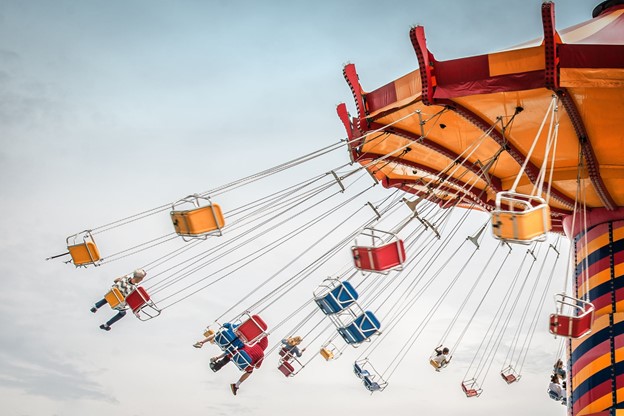
You Must Be the One to Stop It
[1] https://americanaddictioncenters.org/guide-for-children
[2] https://americanaddictioncenters.org/rehab-guide/addiction-statistics
[3] https://ncsacw.samhsa.gov/research/child-welfare-and-treatment-statistics.aspx
[4] https://www.narconon.org/drug-addiction/how-children-are-affected-by-drug-addicted-parents-2/
[5] https://www.therecoveryvillage.com/teen-addiction/faq/does-drug-use-lead-to-addiction/
[6] https://ncsacw.samhsa.gov/research/child-welfare-and-treatment-statistics.aspx
 Fused Together, Creating a Triad of Insight